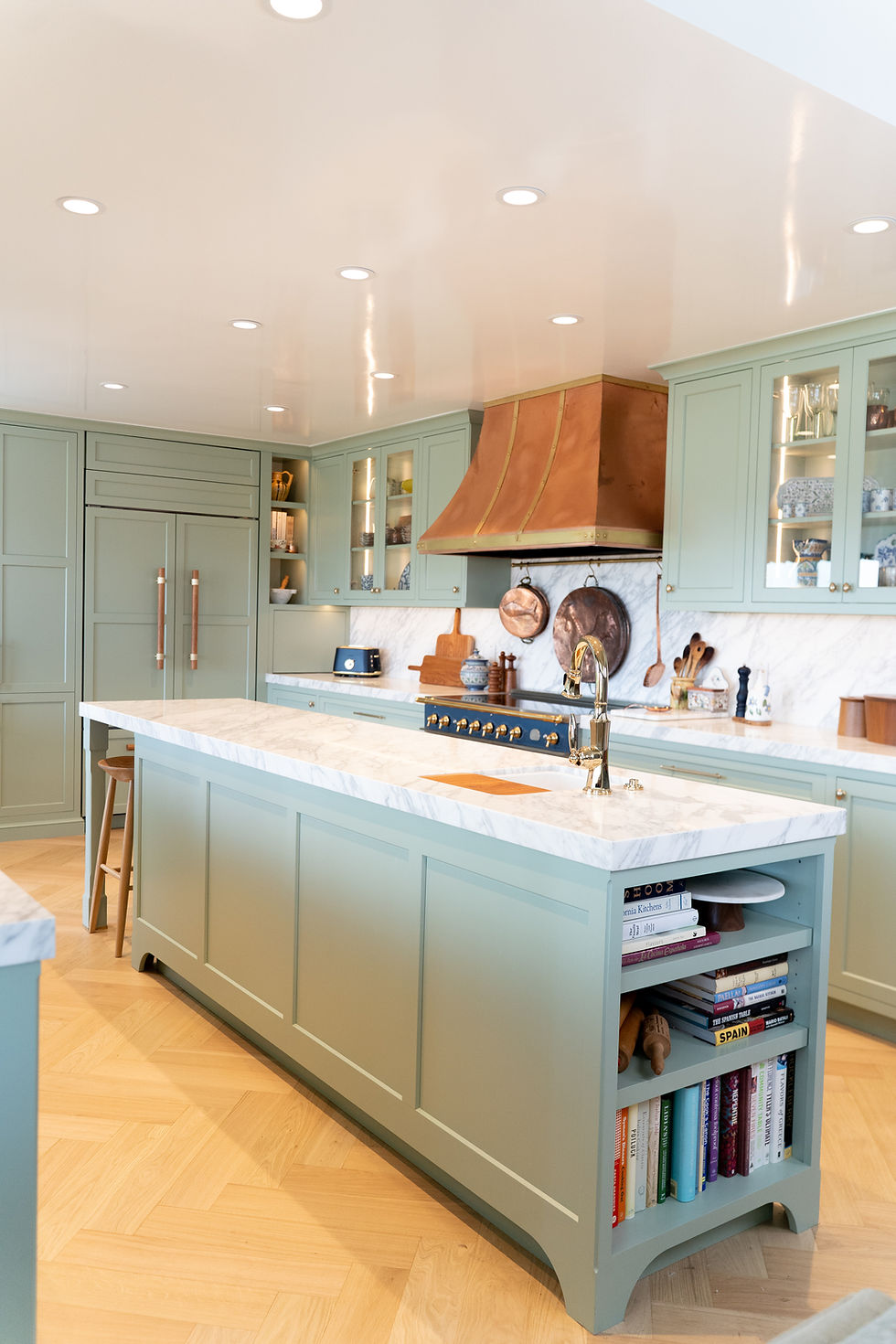
Classic Kitchen Remodel in Orange County with Custom Cabinets and Timeless Finishes
- Apr 17
- 6 min read
Some kitchens try to follow trends. Others set out to feel right for decades. This Orange County kitchen remodel falls firmly in the second category, and every material, color, and detail was chosen with that in mind.
The Rohrbacher project is a full kitchen renovation that blends classic design principles with the kind of functionality modern homeowners actually need. Located in Orange County, California, the remodel transformed a dated kitchen into a space built around contrast, warmth, and enduring craftsmanship. What makes this project worth studying is not just how it looks, but why the design decisions work together so well.
How Two-Tone Kitchen Cabinets Create Depth in an Open Layout
One of the most defining choices in this kitchen is the two-tone cabinetry. The upper cabinets are finished in a bright, clean white that reaches all the way to the ceiling, giving the room height and openness. The lower cabinets are finished in a deep navy blue, which grounds the space and adds a layer of richness that all-white kitchens often lack.
This is not a random color pairing. The contrast between light and dark creates a visual anchor at the base of the room while letting the upper portion of the kitchen breathe. Natural light from the windows bounces off the white surfaces and reflects through the glass-front cabinet doors, making the space feel significantly larger than its footprint suggests.
The glass-front uppers deserve special attention here. Rather than clear glass, these doors feature textured glass panels that partially obscure what is stored behind them. This is a practical and aesthetic decision at the same time. Textured glass lets you display items like glassware and ceramics without demanding that every shelf stays perfectly organized. It adds depth and character to the cabinetry while keeping the overall look refined and uncluttered.
For homeowners considering a cabinet layout like this, the key takeaway is that two-tone kitchen cabinets work best when the tones serve different roles. Light tones expand, dark tones ground, and the line where they meet defines the visual weight of the entire room. Simple panel detailing on the doors keeps things clean, and full-height cabinetry maximizes storage without adding visual noise.

Why a Custom Kitchen Island Anchors the Entire Room
The island is the centerpiece of this kitchen, and it was designed to earn that position. Built with a dark stained wood base and topped with a light countertop, it creates a deliberate contrast against both the white uppers and the navy lowers. That contrast is what separates it from the surrounding cabinetry and makes it read as a standalone piece of furniture rather than just another run of cabinets.
Functionally, the island does serious work. It houses built-in storage on multiple sides with drawers and cabinets accessible from both the cooking and serving zones. A farmhouse-style sink with a high-arc faucet is set into the countertop, which means prep, cooking, and cleanup can all happen in one central location without crossing the kitchen multiple times. For families who cook together or entertain regularly, this layout eliminates a surprising amount of friction in daily kitchen use.
The brass hardware on the island ties it directly to other brass accents throughout the room, including the pulls on the navy cabinets and the detailing on the range. These are small decisions that are easy to overlook, but they create the kind of consistency that makes a kitchen feel intentionally designed rather than assembled from separate parts.
From a design perspective, a custom kitchen island like this works because it balances mass with purpose. It is large enough to command attention, detailed enough to reward a closer look, and functional enough to justify every inch of space it occupies.

Choosing Natural Materials That Age Well in a Kitchen Renovation
Material selection is where short-term thinking shows up fastest in a kitchen remodel. Trendy finishes look sharp on completion day but can start to feel dated within a few years. The material choices in this project were made with longevity as the priority, and the result is a kitchen that will look just as relevant in ten years as it does today.
The perimeter countertops use warm wood, which introduces an organic softness that balances the harder surfaces in the room. Wood countertops do require some care and maintenance, but they develop a patina over time that only adds to their character. In a classic kitchen like this one, that aging process is a feature, not a drawback. The island countertop, by contrast, uses a lighter solid surface material that provides a more durable and maintenance-friendly workspace around the sink and primary prep area.
On the floor, classic hexagonal tiles in a white-and-black pattern reinforce the timeless direction of the entire design. Hexagonal tile has been used in residential kitchens for well over a century, and there is a reason it keeps coming back. The pattern creates subtle visual movement without competing with the cabinetry or the island, and it holds up exceptionally well under heavy daily foot traffic.
The lesson here is straightforward. When you are investing in a full kitchen renovation, the materials you choose should look better with age, not worse. Natural wood, classic tile patterns, and quality stone surfaces all share that quality, and combining them thoughtfully is what gives a kitchen staying power that extends far beyond the initial wow factor.
How Vintage Lighting and Brass Details Tie a Classic Kitchen Together
Hardware and lighting might seem like finishing touches, but in this kitchen they are doing heavy lifting. The metal pendant lights hanging above the island are industrial in shape with a brushed nickel finish, and they immediately set the tone for the entire room. They provide focused task lighting over the main work surface while doubling as sculptural elements that draw the eye upward toward the ceiling beams.
Brass hardware appears across multiple surfaces throughout the kitchen, from the cabinet pulls on the island and lower cabinets to the detailing on the range. This repetition is critical. When a single metal finish appears in just one spot, it looks accidental. When it recurs consistently across the space, it becomes a design language that unifies everything it touches.
One of the more distinctive elements in this kitchen is the antique hutch positioned against the back wall. This is not something you see in most remodels, and that is exactly the point. Including a curated furniture piece in a newly built kitchen prevents the space from looking like a showroom. It introduces history and personality that no amount of new cabinetry can replicate. The ornate wood carving and aged patina of the hutch play beautifully against the crisp lines of the surrounding cabinets, and the result is a kitchen that feels collected over time rather than installed all at once.
For anyone planning a classic kitchen remodel, the takeaway is this: lighting and hardware are not afterthoughts you pick from a catalog at the end of the project. They are the connective tissue that holds your design together, and choosing them early in the process gives every other decision a framework to build around.

What to Expect from a Full Kitchen Remodel in Orange County
A project like this does not happen overnight, and understanding the scope of work involved helps set realistic expectations. The Rohrbacher kitchen required a complete renovation, including demolition of existing finishes, new cabinetry fabrication and installation, countertop templating and fitting, electrical work for lighting and appliances, plumbing for the island sink, tile installation, and detailed finish carpentry throughout.
Each of these trades needs to be sequenced carefully. Electrical and plumbing rough-ins happen before cabinets go in. Cabinets need to be installed and leveled before countertops are templated. Tile work, painting, and trim follow in a specific order to avoid rework and damage to finished surfaces. Professional project management is what keeps all of these moving parts aligned and on schedule.
For Orange County homeowners considering a kitchen remodel of this scope, the process typically begins with a design consultation where layout, materials, and budget are discussed in detail. From there, a design concept is developed, materials are selected and ordered, and construction begins once everything is confirmed. The timeline varies depending on the complexity of the project, the availability of custom materials, and any structural changes required, but thorough planning upfront is always the single biggest factor in a smooth renovation experience.

Take the First Step Toward Your Dream Kitchen Remodel
Le Gourmet Kitchen has been designing and building kitchens across Orange County for homeowners who care about quality, craftsmanship, and results that last. From custom cabinetry and premium materials to full project management and installation, every detail is handled with the same level of attention you see in the Rohrbacher project.
If you are ready to start planning your own kitchen renovation, Le Gourmet Kitchen offers a personalized design consultation where you can walk through your goals, explore material options, and get a clear picture of what your project will look like from start to finish. Reach out to schedule your consultation and take the first step toward a kitchen built around the way you actually live.