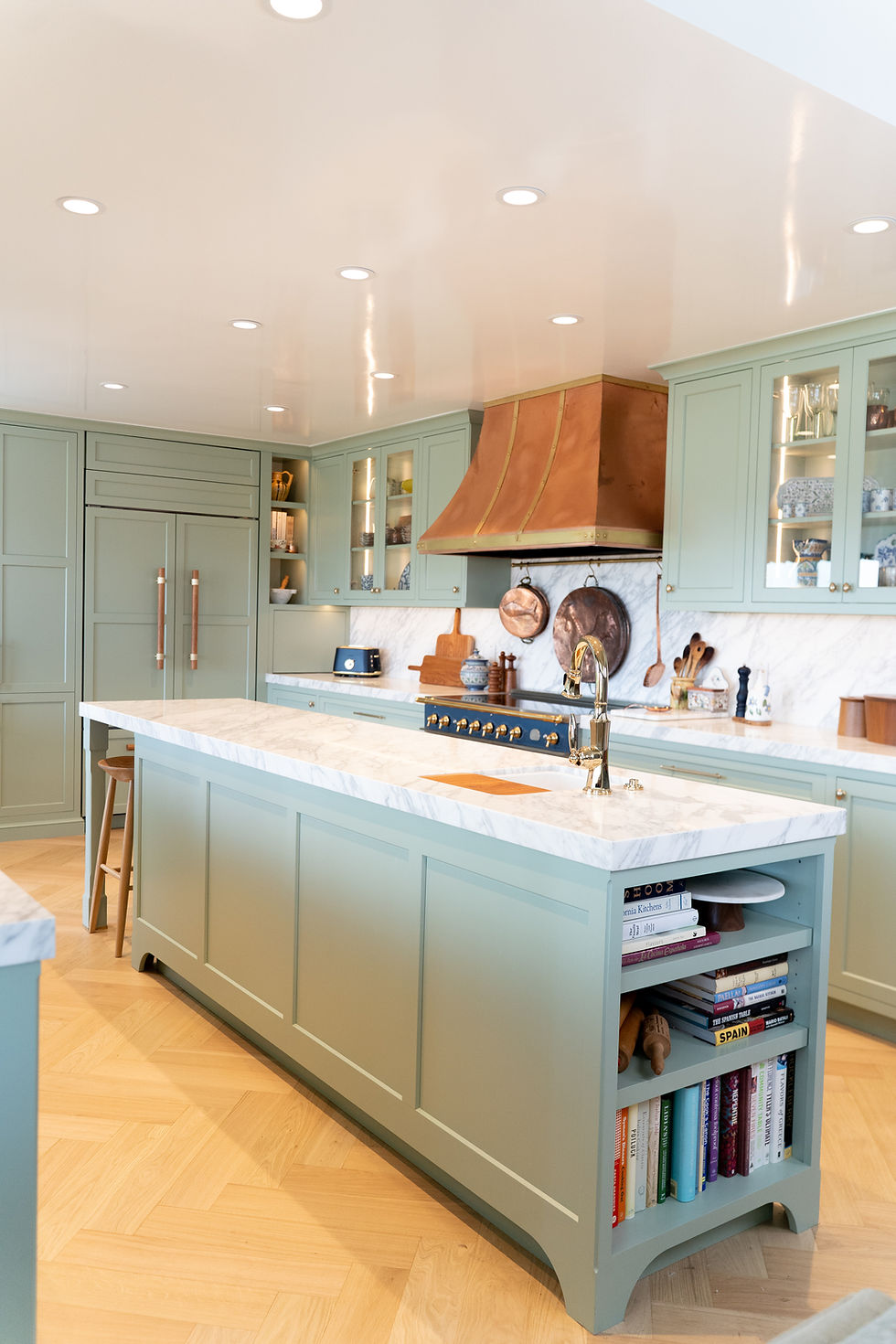
Handcrafted Japandi Kitchen Cabinets in Orange County Through an Exclusive Manufacturer
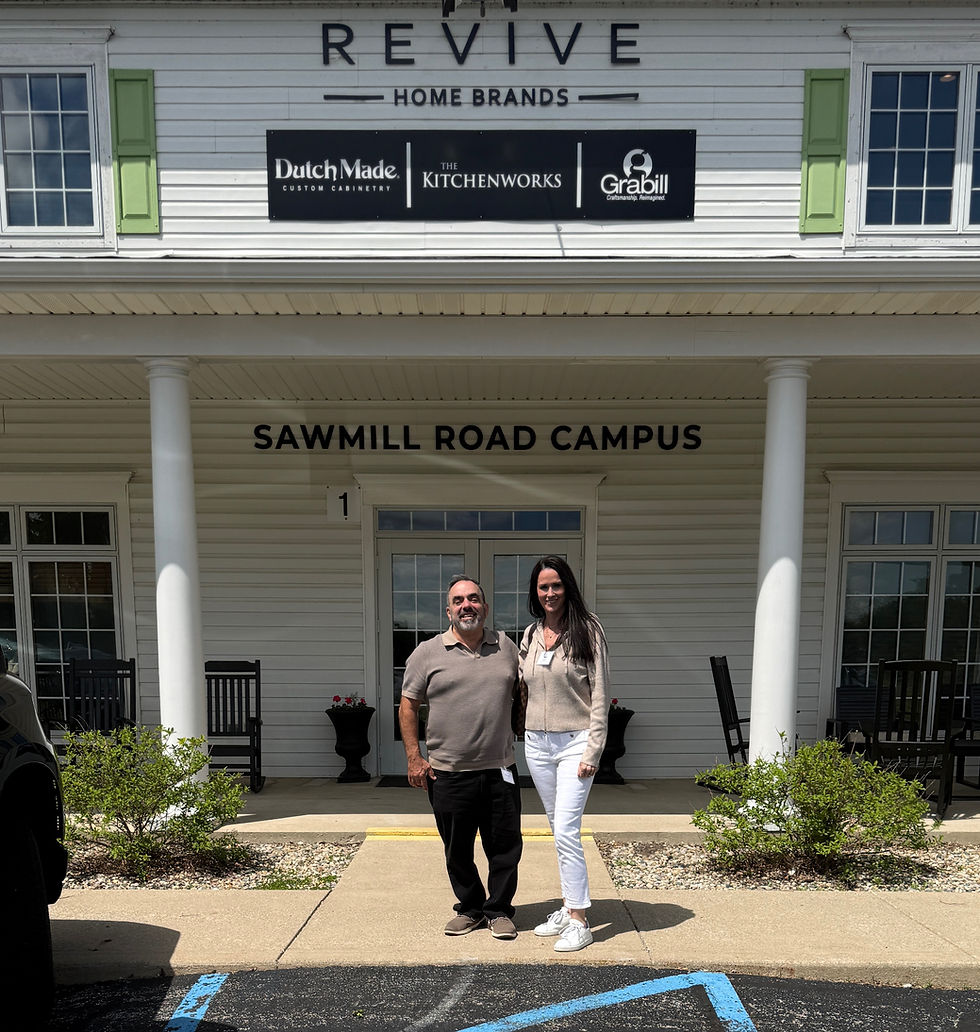
Bruce, the founder of Le Gourmet Kitchen, recently returned from a visit to one of our manufacturing partners in rural Indiana. Here is what he saw and why it matters for our clients in Orange County.
"I just got back from Grabill, Indiana. No skyline, no traffic, no noise. Just farmland, workshops, and one of the finest cabinet making operations in the United States.
Most of you have never heard of Grabill. Most people in our industry have not heard of it either. And that is kind of the point. I want to tell you about what I saw there, because it changed the way I think about what we are about to offer our clients in Orange County and why it matters that we are one of only three authorized dealers in the region who can bring this level of craft into your home."
Where Your Custom Kitchen Cabinets Actually Come From
Dutch Made has been building cabinets in this corner of Indiana since 1952. That is over seventy years of unbroken craftsmanship, rooted in the Amish woodworking tradition of a region where quality is not a selling point but a way of life. These are people who build furniture the way their grandparents did, with hand selected hardwoods, dovetail joinery, and a level of finish that you can feel the moment you open a door.
I am not talking about mass produced cabinetry with a marketing story attached. I am talking about a building in a small town where every cabinet box is built by someone who knows the name of the person who will use it. There is a difference between a cabinet that was manufactured and a cabinet that was made, and that difference is something you cannot fully appreciate from a photo or a catalog page. You feel it the first time you close a drawer and it moves like silk. You feel it five years later when the finish still looks like it did on day one. You feel it twenty years later when the box is still perfectly square and the doors still hang exactly the way they were set.
Walking through the Dutch Made production floor, I could see every stage of the process from raw material selection through milling, assembly, finishing, and final inspection. Nothing is rushed, nothing is automated beyond where it should be, and no shortcuts are taken to hit a faster production schedule. That is the kind of operation I want standing behind the cabinets we put into our clients' homes.
Why I Flew to Indiana to Meet the Designer Behind the Katachi Collection
Here is the real reason I made this trip. Dutch Made recently launched a collection called Katachi, and it is the most interesting thing I have seen in cabinetry design in a very long time. The name comes from a Japanese word that has no direct English translation but conveys a deep design sensibility rooted in the relationship between material and form, where reverence for nature and hand craftsmanship define every decision.
The collection was designed by Scott A. Stultz, one of the most respected cabinet door designers working in the industry today. Scott has spent more than thirty years creating collections for leading names in luxury kitchens and interiors, drawing on his background in architecture, furniture design, and his own Japanese heritage. I had the chance to meet him on this trip, and the way he talks about his work is the way I think about kitchen design. It is not about following trends. It is about creating something with intention and soul.
Seeing his process firsthand, understanding how he thinks about proportion, light, texture, and the way a door feels when you touch it, gave me a perspective that no product brochure or trade show presentation could ever provide. That knowledge goes directly into the recommendations I make for our clients, and it is one of the reasons I believe in visiting the factories and meeting the people behind every product line we carry.

Inside the Katachi Collection and How It Brings Authentic Japandi Design to Custom Cabinetry
You have probably seen the word Japandi on Pinterest or in design magazines. It describes the intersection of Japanese minimalism and Scandinavian warmth, and it has become one of the most sought after aesthetics in luxury kitchen design across Orange County, especially in communities like Newport Beach, Laguna Beach, and Coto de Caza.
But here is what most people do not realize. The majority of companies offering Japandi inspired kitchens are imitating the look with standard materials, choosing light wood tones and minimal hardware and calling it done. Katachi is something fundamentally different. It was built from the ground up around the philosophy that defines the style. The screens, the joinery, the proportions, the hardware, everything was designed as one integrated system rather than assembled from separate catalog selections.
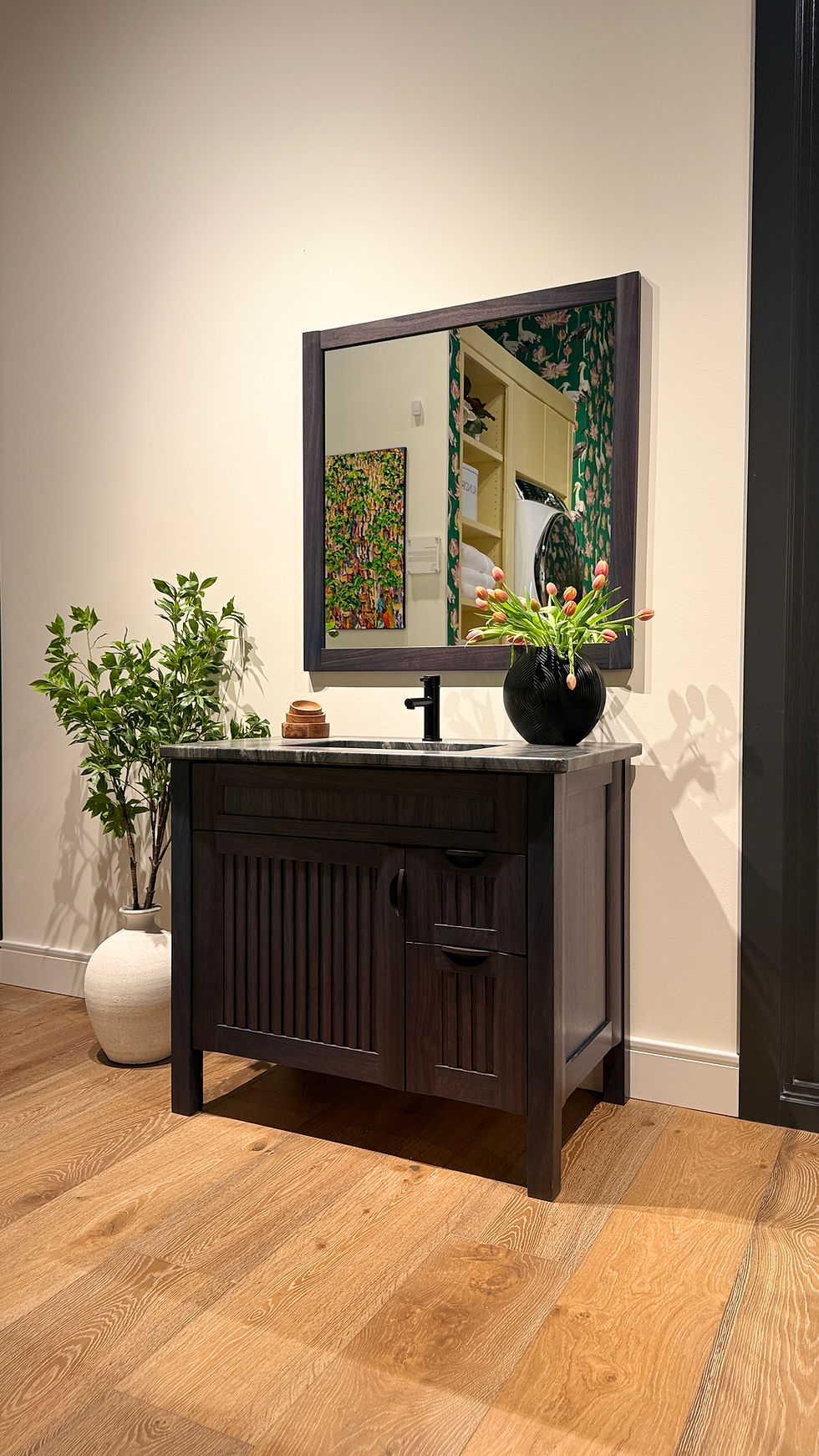
Katachi is a complete product collection for every room of the home, built around two base door styles and a full range of panel options that give designers more than three hundred possible style combinations. The nine koshi styles, which are vertical lattice screens inspired by traditional Japanese architecture, allow designers to create different moods and different plays of light and shadow within the same space. Each screen pattern produces a distinct visual rhythm, and combining different screens in different areas of a kitchen or home means no two installations ever feel the same.
The bypass sliding doors are the detail that made me stop on the factory floor. Inspired by Japanese shoji screens but built with the precision of American cabinetry, they are elegant, they are functional, and they make a pantry or bar area feel like a piece of architecture rather than a storage solution.
The collection also includes heirloom grade furniture pieces, including hutches, beverage stations, and sideboards designed to be passed down. In a world where so much is disposable, there is something deeply satisfying about placing a piece in your home that your grandchildren will use.
And then there is the hardware. The exclusive Katachi hardware line is not something you can buy separately or source from a third party supplier. It comes only with the collection and is available in five finishes: Burnished Brass, Dark Antique Brass, Lacquered Polished Brass, Satin Nickel, and Oil Rubbed Bronze. Each finish was designed to complement the wood tones and panel textures of the collection, so every visible detail maintains the same level of intentionality.
How 300 Design Combinations Guarantee a One of a Kind Kitchen
One of the biggest concerns I hear from homeowners investing in a premium kitchen remodel is uniqueness. When you are committing this level of budget and thought to a space, the last thing you want is to walk into someone else's home and see something that looks nearly identical. With Katachi, that concern is effectively eliminated.
The combination system works by layering choices across multiple dimensions. You start with one of two base door styles, then select from the full range of panel configurations, which already opens up a significant number of visual directions. From there, the nine koshi screen styles introduce another layer of variation. Add the five exclusive hardware finishes, the option of bypass sliding doors, and the choice of complementary furniture pieces, and the total number of unique configurations reaches well into the hundreds.
What this means in practice is that two kitchens built using Katachi can look and feel completely different from each other, even if they share the same base door style. The framework is consistent enough to ensure design coherence across a project, but flexible enough that no two homes ever need to repeat the same combination. For our clients, this translates into a concrete promise: your kitchen will be one of a kind.

Why Only Three Dealers in Orange County Can Offer This Level of Custom Cabinetry
I want to be direct about this. You cannot get Katachi or Dutch Made cabinetry at a home improvement store, through an online retailer, or from most kitchen design firms in the region. Dutch Made works through a closed dealer network, and they choose their partners carefully because the design integration and installation matter as much as the cabinet itself.
Le Gourmet Kitchen is one of only three authorized Dutch Made dealers in Orange County. That is not a marketing claim designed to create urgency. It is a fact that reflects how this manufacturer operates and why they limit distribution to firms that meet their standards for design capability, installation quality, and client service.
For the homeowner, this model provides real advantages. It means direct communication with the factory rather than going through layers of distribution. It means access to the full range of customization options, including configurations that never appear in a standard catalog or on a website. It means transparent lead times, reliable warranty support, and a documented chain of accountability from design through production through installation.
And it means working with a team that does not just sell these cabinets but has physically been to the facility where they are made, met the craftspeople who build them, and understands at a hands on level how every joint, finish, and detail comes together. When I recommend Dutch Made to a client, I am not repeating a sales pitch from a distributor. I am sharing what I have seen with my own eyes and touched with my own hands.

Book a Design Consultation to See the Katachi Collection in Person
If you are drawn to the Japandi aesthetic, interested in handcrafted American cabinetry, or simply looking for a kitchen that no one else in your neighborhood will have, I would love to show you what Katachi can do. As one of only three authorized dealers in Orange County, Le Gourmet Kitchen offers the full collection for you to explore, customize, and build into your project.
Schedule a design consultation to see the Katachi collection firsthand, walk through the material and finish options, and have an honest conversation about what this level of craftsmanship looks like in your home. Do not wait until you see it in someone else's kitchen. Come see it yourself.