Kitchen Design Basics and How to Create a Functional Layout That Works for Your Home
- Jun 27
- 7 min read
A beautiful kitchen in Orange County that does not function well is a kitchen you will eventually resent. Layout is the foundation that determines whether cooking feels effortless or frustrating, whether two people can work side by side or constantly collide, and whether the space supports the way you actually live rather than the way a floor plan assumes you should.
Before selecting countertops, cabinet finishes, or appliances, the layout has to be right. This guide covers the core principles of functional kitchen design, from the classic work triangle to the zone-based approach that leading designers are using today, along with practical guidance on choosing the right configuration for your home.

What the Kitchen Work Triangle Is and Why It Still Matters
The kitchen work triangle is one of the oldest principles in residential kitchen design. It connects the three most used stations in any kitchen, the refrigerator, the sink, and the cooktop, into a triangular path that minimizes unnecessary steps while cooking.
The general guidelines are straightforward. Each side of the triangle should measure between four and nine feet, and the total perimeter should fall between thirteen and twenty-six feet. No major traffic path should cut through the triangle, and no large obstacle like an island or table should block movement between any two points.
This concept was developed in the 1940s for single-cook kitchens with compact footprints, and for that use case it remains remarkably effective. If your household has one primary cook and a kitchen of moderate size, the work triangle will deliver a layout that feels intuitive and efficient from day one. It is also an excellent starting point for any kitchen design conversation because it forces you to think about movement and proximity before anything else.
Where the work triangle reaches its limits is in larger kitchens, open-concept layouts, and households where more than one person regularly uses the kitchen at the same time. In those situations, the triangle alone is not enough to account for everything happening in the space.
Not sure which layout works best for your kitchen?
Our team will help you plan a layout built around the way you actually cook and live.

How Kitchen Work Zones Create a Better Layout for Modern Homes
The zone-based approach to kitchen design builds on the work triangle by dividing the kitchen into dedicated areas based on activity rather than appliance location. Instead of thinking about three fixed points, you think about five or six functional zones that each serve a specific purpose.
A typical zone layout includes a food storage zone (refrigerator, pantry, dry goods), a preparation zone (counter space, cutting boards, small appliances, prep sink), a cooking zone (range, oven, vent hood, spices, cooking utensils), a cleaning zone (primary sink, dishwasher, waste, recycling), and a serving or entertaining zone (counter or island surface for plating, beverages, casual seating).
The advantage of this approach is that it accounts for how modern kitchens are actually used. When two people cook together, a zone-based layout allows them to work simultaneously without crossing paths. One person can prep at the island while another cooks at the range, and a third can handle cleanup at the sink without anyone getting in anyone else's way.
For Orange County homes with open-concept floor plans, zone design also helps define the kitchen's functional boundaries within a larger shared space. Even without walls, the placement of zones creates a natural sense of organization that keeps the kitchen feeling intentional rather than scattered.

Which Kitchen Floor Plan Configuration Fits Your Space
Layout principles like the triangle and zones need to be applied within a specific floor plan shape. The most common kitchen configurations each have their own strengths, and understanding which one fits your space is the first practical step toward a functional design.
L-shaped kitchens use two perpendicular walls and leave the rest of the room open. This is one of the most versatile configurations because it works well in both small and large spaces, accommodates an island easily, and naturally supports the work triangle with the sink typically positioned at the corner. L-shaped layouts are especially popular in open-concept homes where the kitchen connects to a dining or living area.
U-shaped kitchens use three walls to create an enclosed workspace with counters and cabinets on all sides. This layout maximizes storage and counter space and keeps everything within arm's reach, which makes it ideal for serious home cooks. The main consideration is ensuring that the opening of the U is wide enough to avoid feeling cramped, generally at least five feet between opposing counters.
Galley kitchens feature two parallel walls with a walkway in between. While compact, galley layouts are among the most efficient for cooking because every station is close together and movement is linear. They are commonly found in smaller homes, condos, and apartments, and when well designed they can be surprisingly functional despite their narrow footprint.
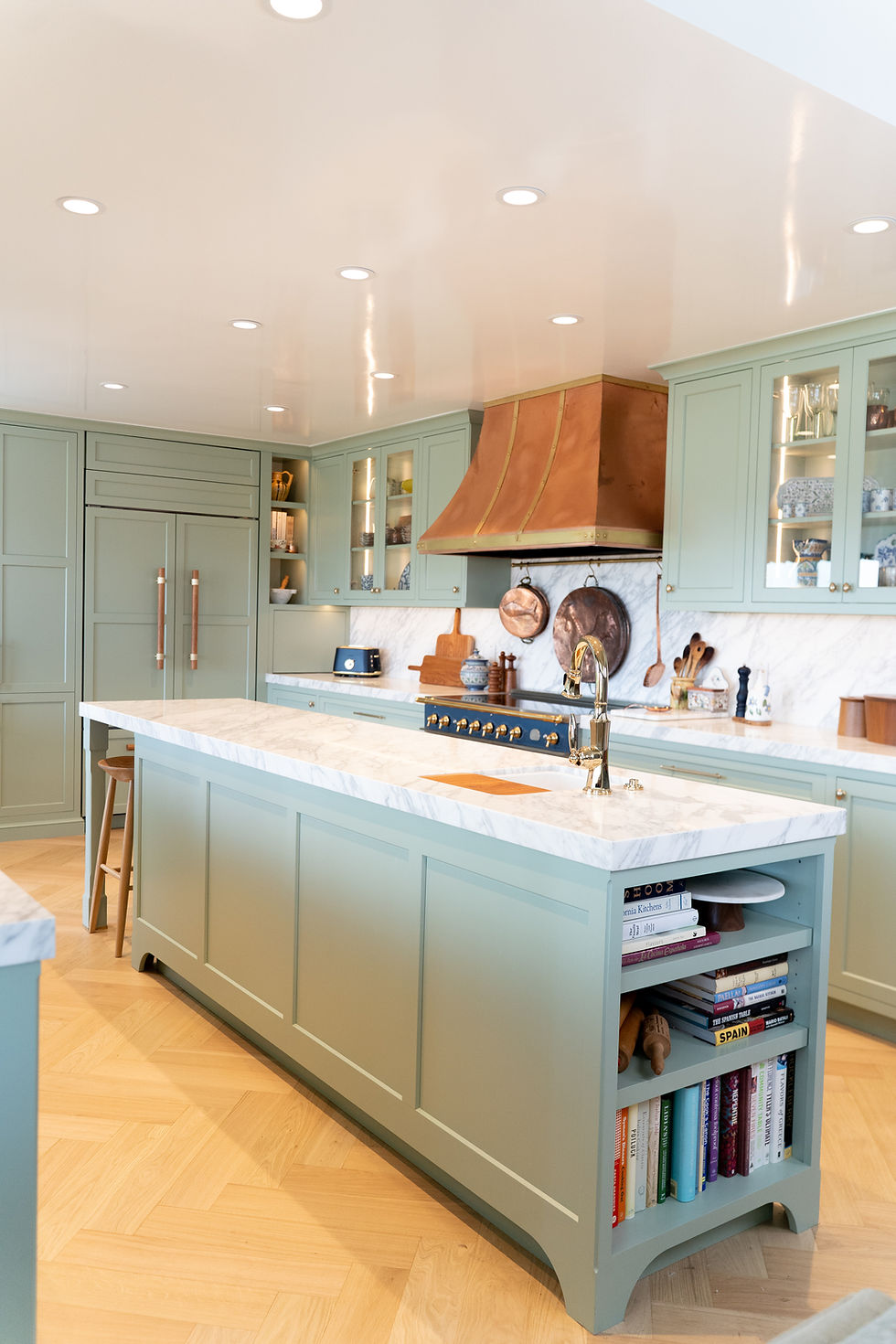
Island layouts add a freestanding work surface to any of the configurations above. An island can serve as a prep station, a cooking station with a built-in cooktop, a cleanup station with a sink, or a casual dining area with seating. The key requirement is adequate clearance on all sides, typically forty-two inches minimum for walkways and forty-eight inches where someone might be working at a counter while another person passes behind.

How to Design Kitchen Storage That Supports Your Daily Workflow
A functional kitchen layout is not just about where you place the big three appliances. It is equally about where everything else lives and how easily you can access it during the tasks you perform most often.
The most effective storage strategy is to store items as close as possible to where they are used. Dishes and glasses should be within reach of the dishwasher for easy unloading. Pots and pans belong near the cooktop. Cutting boards, knives, and prep tools should live adjacent to your primary counter workspace. Baking supplies, mixing bowls, and measuring tools should cluster near a dedicated baking area if your household bakes regularly.
Vertical storage is one of the most underutilized opportunities in kitchen design. Full-height pantry cabinets, tall pull-out spice racks, tray dividers in upper cabinets, and vertical drawer organizers can dramatically increase your usable storage without expanding the kitchen's footprint. For kitchens where space is limited, this approach is often the difference between a layout that feels cramped and one that feels spacious.
Drawer storage has also become increasingly preferred over traditional lower cabinets with shelves. Deep drawers with dividers provide full visibility and access to their contents without bending down and reaching into the back of a cabinet. Many premium cabinetry lines now offer drawer-based lower cabinet systems as a standard option, and homeowners who make the switch consistently report that it transforms how they interact with the kitchen on a daily basis.

Why Counter Space Placement Matters More Than Total Counter Area
Most homeowners focus on maximizing square footage of counter space, but placement is actually more important than total area. A kitchen with generous counter space in the wrong locations will still feel dysfunctional, while a kitchen with strategically placed surfaces will feel efficient even if the total area is modest.
The most critical counter placement is immediately adjacent to the cooktop and the sink. You need landing space on both sides of the cooktop for setting down ingredients, resting a hot pan, and plating food. Next to the sink, you need space for dish drying, food prep, and staging items for cleanup. Without adequate counter on both sides of these two stations, daily cooking becomes a constant juggle of moving things out of the way.
Counter space next to the refrigerator is another detail that is often overlooked during the design phase. When you unload groceries, you need a surface immediately beside the fridge to set bags and containers before putting things away. If the nearest counter is across the kitchen, that simple task becomes unnecessarily inconvenient.
If your layout includes an island, think carefully about its role. An island that tries to do everything, sink, cooktop, seating, and storage, can end up doing none of those things well. The most functional islands are designed with one or two primary purposes in mind, and the remaining functions are distributed across the perimeter counters where they have more room to operate effectively.

How Traffic Flow and Clearance Affect Your Kitchen Layout
Even the most thoughtfully designed kitchen can fall apart if traffic flow is not accounted for. The kitchen is typically one of the busiest rooms in the house, and the path that people take through it affects both safety and usability.
The most important principle is that no primary traffic path should cut through an active work zone. If family members, guests, or children regularly walk through the space between the sink and the cooktop to reach the dining room or back door, that path will constantly interrupt whoever is cooking. Designing the layout so that through-traffic flows around the perimeter of the work area rather than through it makes a noticeable difference in everyday comfort.
Clearance dimensions are equally important and are often the detail that separates a kitchen that feels spacious from one that feels tight. The minimum recommended walkway width is forty-two inches, and in areas where two people might be working back to back, forty-eight inches is preferred. In front of appliances like dishwashers, ovens, and refrigerators, you need enough room to fully open the door while someone can still pass behind.
For kitchens with islands, the clearance between the island and the perimeter counters is one of the most consequential measurements in the entire design. Too narrow and the kitchen will feel congested. Too wide and the work zones lose their efficiency because you are taking extra steps between stations.

Book a Kitchen Design Consultation to Plan Your Ideal Layout
At Le Gourmet Kitchen, layout planning is where every project begins. Before materials, finishes, or appliances are selected, our design team works with each client to understand how they cook, how they entertain, who uses the kitchen, and what frustrations their current layout creates. That conversation shapes every decision that follows.
Whether you are starting from scratch with a new build or reconfiguring an existing kitchen through a full remodel, we can help you design a layout that fits your space, supports your daily routine, and creates a kitchen that works as well as it looks. Schedule a design consultation and let us show you what a properly planned kitchen feels like.